
 Image 1 of 4
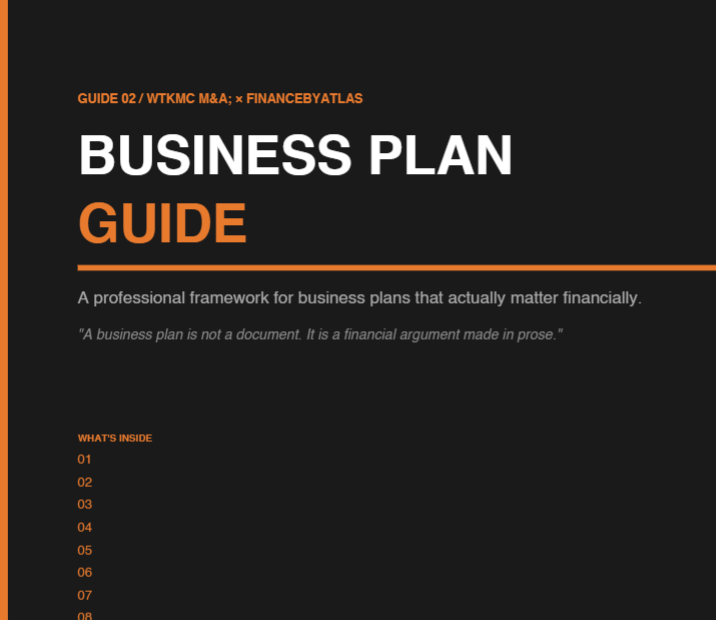 Image 2 of 4
 Image 3 of 4
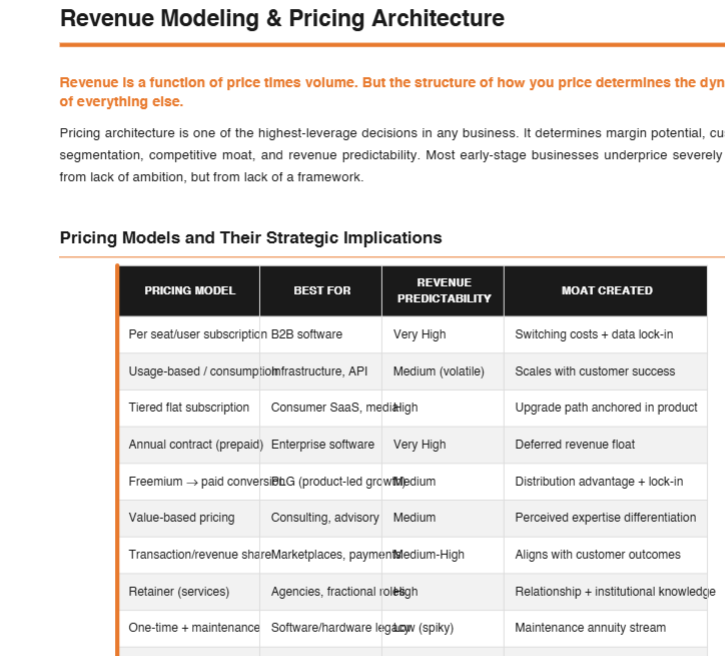 Image 4 of 4
Most business plans fail not from lack of ambition — but from lack of financial rigor on a small number of critical points. Investors have seen thousands of slide decks. The ones that get funded have something specific in common: they are financially coherent. Every claim is traceable to an assumption. Every assumption is defensible.
This guide teaches you how to build that kind of plan — whether you're raising capital, planning a business, or making an investment in your own future.
WHAT'S INSIDE — 8 CHAPTERS:
→ Market Sizing — TAM, SAM, SOM Done Right
'The global fitness market is $100 billion — if we capture just 1%...' Every experienced investor stops reading here. This chapter replaces the top-down percentage grab with a bottom-up market sizing approach built from real customer units: define the ideal customer profile, count them, multiply by price, and apply a penetration rate grounded in go-to-market reality. Includes a full worked example and a TAM construction guide for 7 business types.
→ Revenue Modeling & Pricing Architecture
Pricing architecture is one of the highest-leverage decisions in any business. This chapter covers 10 pricing models — per seat, usage-based, tiered subscription, freemium, retainer, transaction share, and more — with their revenue predictability, moat implications, and strategic tradeoffs. Then walks through how to build a proper revenue model with drivers rather than a growth rate applied to last year's number.
→ Operational Planning & Cost Structure
Every cost decision is a strategic decision. This chapter maps the fixed vs. variable cost architecture, explains operating leverage and why it cuts both ways, and helps you build a cost structure that matches the predictability of your revenue.
→ Break-Even Analysis & Unit Economics
Three numbers define the financial viability of any business: Customer Acquisition Cost, Lifetime Value, and payback period. This chapter explains all three with formulas and examples, covers the LTV/CAC threshold that separates fundable from unfundable businesses, and walks through contribution margin and break-even volume calculations.
→ Cash Runway Forecasting
Runway is not a planning tool. It is a survival metric. This chapter covers gross vs. net burn rate, how to build a proper 18-month cash model, and how to stress-test it against a bear case where revenue is 50% below plan. The bear case is the one that kills companies.
→ The Financial Narrative — Investor Logic
The financial section of a business plan is not a forecast. It is an argument — one that claims the market is real, the unit economics work, the model is credible, and the capital is being deployed efficiently. This chapter explains the investor logic chain and how to construct the three-scenario financial model (bear, base, bull) that serious investors expect.
→ Business Type Templates — Creator, SaaS, Agency, Local
The same financial framework applies to every business — but the inputs look completely different. This chapter breaks down the specific financial model for four business types with their metrics, revenue drivers, margin profiles, and scale levers.
→ Fatal Mistakes in Business Plans
The eight mistakes that appear in the vast majority of plans reviewed by serious investors — including top-down market sizing, revenue projections without underlying drivers, unit economics that don't work at scale, and identical margins regardless of revenue level. Each one is explained with the specific question it fails to answer.
WHO THIS IS FOR:
Founders preparing to raise capital. Operators planning a new business. Anyone who has written a business plan that didn't get the response they expected.
FORMAT: PDF — Instant download. No subscription. Yours forever.
Most business plans fail not from lack of ambition — but from lack of financial rigor on a small number of critical points. Investors have seen thousands of slide decks. The ones that get funded have something specific in common: they are financially coherent. Every claim is traceable to an assumption. Every assumption is defensible.
This guide teaches you how to build that kind of plan — whether you're raising capital, planning a business, or making an investment in your own future.
WHAT'S INSIDE — 8 CHAPTERS:
→ Market Sizing — TAM, SAM, SOM Done Right
'The global fitness market is $100 billion — if we capture just 1%...' Every experienced investor stops reading here. This chapter replaces the top-down percentage grab with a bottom-up market sizing approach built from real customer units: define the ideal customer profile, count them, multiply by price, and apply a penetration rate grounded in go-to-market reality. Includes a full worked example and a TAM construction guide for 7 business types.
→ Revenue Modeling & Pricing Architecture
Pricing architecture is one of the highest-leverage decisions in any business. This chapter covers 10 pricing models — per seat, usage-based, tiered subscription, freemium, retainer, transaction share, and more — with their revenue predictability, moat implications, and strategic tradeoffs. Then walks through how to build a proper revenue model with drivers rather than a growth rate applied to last year's number.
→ Operational Planning & Cost Structure
Every cost decision is a strategic decision. This chapter maps the fixed vs. variable cost architecture, explains operating leverage and why it cuts both ways, and helps you build a cost structure that matches the predictability of your revenue.
→ Break-Even Analysis & Unit Economics
Three numbers define the financial viability of any business: Customer Acquisition Cost, Lifetime Value, and payback period. This chapter explains all three with formulas and examples, covers the LTV/CAC threshold that separates fundable from unfundable businesses, and walks through contribution margin and break-even volume calculations.
→ Cash Runway Forecasting
Runway is not a planning tool. It is a survival metric. This chapter covers gross vs. net burn rate, how to build a proper 18-month cash model, and how to stress-test it against a bear case where revenue is 50% below plan. The bear case is the one that kills companies.
→ The Financial Narrative — Investor Logic
The financial section of a business plan is not a forecast. It is an argument — one that claims the market is real, the unit economics work, the model is credible, and the capital is being deployed efficiently. This chapter explains the investor logic chain and how to construct the three-scenario financial model (bear, base, bull) that serious investors expect.
→ Business Type Templates — Creator, SaaS, Agency, Local
The same financial framework applies to every business — but the inputs look completely different. This chapter breaks down the specific financial model for four business types with their metrics, revenue drivers, margin profiles, and scale levers.
→ Fatal Mistakes in Business Plans
The eight mistakes that appear in the vast majority of plans reviewed by serious investors — including top-down market sizing, revenue projections without underlying drivers, unit economics that don't work at scale, and identical margins regardless of revenue level. Each one is explained with the specific question it fails to answer.
WHO THIS IS FOR:
Founders preparing to raise capital. Operators planning a new business. Anyone who has written a business plan that didn't get the response they expected.
FORMAT: PDF — Instant download. No subscription. Yours forever.