
 Image 1 of 4
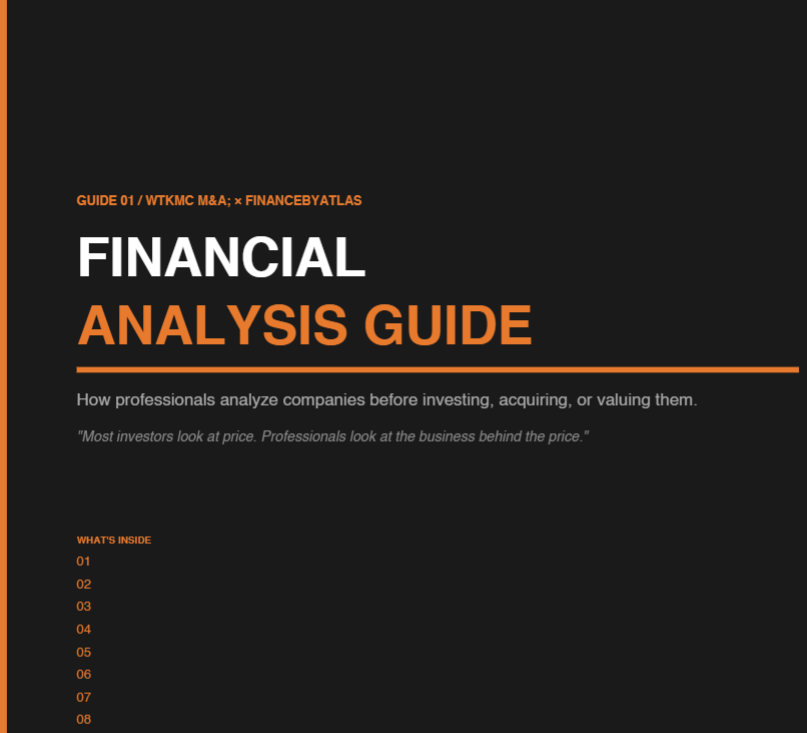 Image 2 of 4
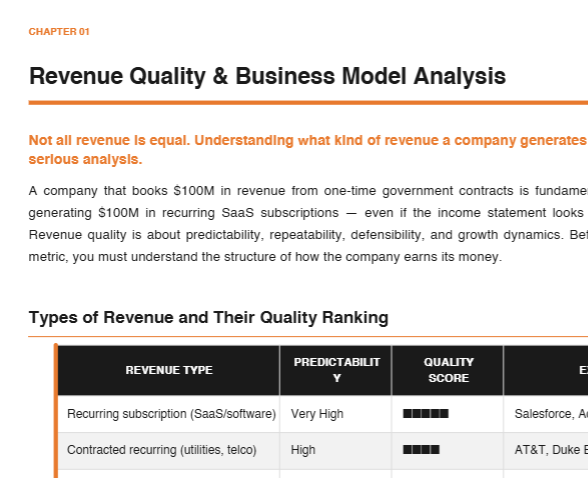 Image 3 of 4
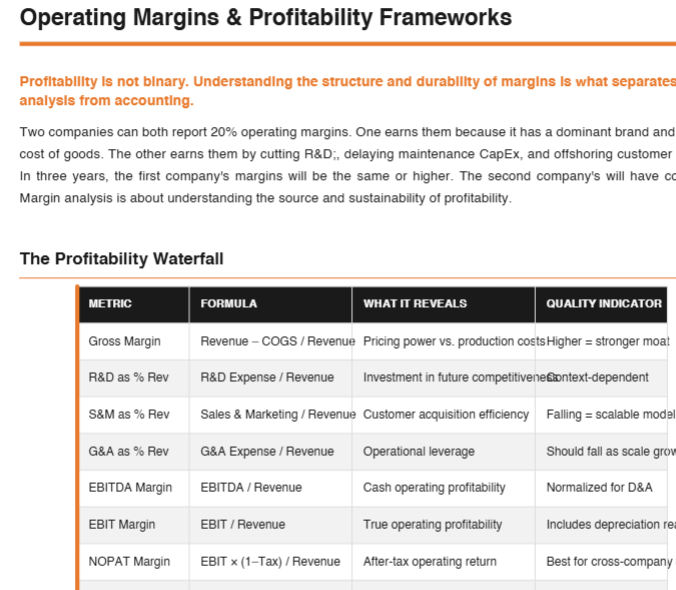 Image 4 of 4
This is the guide that separates people who invest from people who analyze. It is a complete breakdown of how professionals — investment bankers, equity analysts, and institutional investors — evaluate a company before committing capital.
Not theory. Not motivation. A working framework, applied step by step.
WHAT'S INSIDE — 10 CHAPTERS:
→ Revenue Quality & Business Model Analysis
Not all revenue is equal. This chapter teaches you the difference between recurring SaaS subscription revenue and one-time contract revenue, why that distinction matters more than the headline number, and how to detect the warning signs that management doesn't volunteer: rising days sales outstanding, channel stuffing patterns, deferred revenue deterioration, and related-party inflation. Includes a full revenue quality ranking table across 12 business model types.
→ Operating Margins & Profitability Frameworks
Two companies can both report 20% operating margins. One earns them through pricing power and a defensible moat. The other earns them by cutting R&D and starving maintenance CapEx. In three years, their trajectories will be completely different. This chapter gives you the full profitability waterfall — from gross margin through EBITDA through FCF margin — with a detailed reference of typical gross margins across 12 industries and a full explanation of operating leverage.
→ Free Cash Flow — The Real Profit Metric
Net income is an opinion. Free cash flow is a fact. This chapter explains why the two diverge, how to calculate every variant of FCF (simple, maintenance, FCFF, FCFE, Buffett's owner earnings), how to interpret FCF yield as a valuation tool, and how to read working capital changes as cash quality signals.
→ Balance Sheet & Debt Structure Analysis
The income statement tells you about the past. The balance sheet tells you about survivability. This chapter covers the full asset and liability taxonomy, the hidden debt checklist (operating leases, pension deficits, supplier financing programs, off-balance-sheet structures), and the complete debt analysis framework — leverage ratios, interest coverage, maturity profiles, floating rate exposure, and covenant analysis.
→ Dilution Risk & Capital Structure
Every stock option grant, convertible note, and secondary offering transfers value from existing shareholders to new ones. This chapter maps every source of dilution, explains how the fully diluted share count differs from what most people look at, and provides the data on how much SBC the S&P 500 quietly issues every year.
→ Management Incentives & Corporate Governance
Show me the incentive and I'll show you the outcome. This chapter applies Charlie Munger's core principle to corporate analysis: maps eight incentive structures to their likely behavioral outcomes, covers the governance quality checklist, and identifies the specific red flags that predict management decisions before they happen.
→ Segment Analysis & Business Decomposition
AWS generates 17% of Amazon's revenue and over 60% of its operating profit. If you only read the consolidated numbers, you are analyzing the average of both — and missing most of the signal. This chapter teaches you how to decompose a company into its constituent businesses and find the truth inside the blended total.
→ Financial Statement Interpretation
The income statement, balance sheet, and cash flow statement are three windows into the same building. Inconsistencies between them are where professional analysts find the most important signals. This chapter explains how they link, what moves where when transactions occur, and what to do when they don't add up.
→ Ratio Frameworks & Red Flags
14 core financial ratios, each explained with its formula, what it actually measures, its limitation, and the correct analytical follow-up question. Ratios are prompts, not conclusions — this chapter teaches you to use them that way.
→ Putting It Together — The Analysis Stack
The professional sequence for building a complete, coherent investment thesis: business model → income quality → cash flow → balance sheet → management → valuation. Beginning with valuation before understanding the business is the most common analytical error. This chapter explains why and how to do it correctly.
WHO THIS IS FOR:
Investors who want to stop reading about stocks and start analyzing businesses. Anyone evaluating a company for investment, acquisition, or competitive research. Finance professionals who want a clean reference framework.
FORMAT: PDF — Instant download. No subscription. Yours forever.
This is the guide that separates people who invest from people who analyze. It is a complete breakdown of how professionals — investment bankers, equity analysts, and institutional investors — evaluate a company before committing capital.
Not theory. Not motivation. A working framework, applied step by step.
WHAT'S INSIDE — 10 CHAPTERS:
→ Revenue Quality & Business Model Analysis
Not all revenue is equal. This chapter teaches you the difference between recurring SaaS subscription revenue and one-time contract revenue, why that distinction matters more than the headline number, and how to detect the warning signs that management doesn't volunteer: rising days sales outstanding, channel stuffing patterns, deferred revenue deterioration, and related-party inflation. Includes a full revenue quality ranking table across 12 business model types.
→ Operating Margins & Profitability Frameworks
Two companies can both report 20% operating margins. One earns them through pricing power and a defensible moat. The other earns them by cutting R&D and starving maintenance CapEx. In three years, their trajectories will be completely different. This chapter gives you the full profitability waterfall — from gross margin through EBITDA through FCF margin — with a detailed reference of typical gross margins across 12 industries and a full explanation of operating leverage.
→ Free Cash Flow — The Real Profit Metric
Net income is an opinion. Free cash flow is a fact. This chapter explains why the two diverge, how to calculate every variant of FCF (simple, maintenance, FCFF, FCFE, Buffett's owner earnings), how to interpret FCF yield as a valuation tool, and how to read working capital changes as cash quality signals.
→ Balance Sheet & Debt Structure Analysis
The income statement tells you about the past. The balance sheet tells you about survivability. This chapter covers the full asset and liability taxonomy, the hidden debt checklist (operating leases, pension deficits, supplier financing programs, off-balance-sheet structures), and the complete debt analysis framework — leverage ratios, interest coverage, maturity profiles, floating rate exposure, and covenant analysis.
→ Dilution Risk & Capital Structure
Every stock option grant, convertible note, and secondary offering transfers value from existing shareholders to new ones. This chapter maps every source of dilution, explains how the fully diluted share count differs from what most people look at, and provides the data on how much SBC the S&P 500 quietly issues every year.
→ Management Incentives & Corporate Governance
Show me the incentive and I'll show you the outcome. This chapter applies Charlie Munger's core principle to corporate analysis: maps eight incentive structures to their likely behavioral outcomes, covers the governance quality checklist, and identifies the specific red flags that predict management decisions before they happen.
→ Segment Analysis & Business Decomposition
AWS generates 17% of Amazon's revenue and over 60% of its operating profit. If you only read the consolidated numbers, you are analyzing the average of both — and missing most of the signal. This chapter teaches you how to decompose a company into its constituent businesses and find the truth inside the blended total.
→ Financial Statement Interpretation
The income statement, balance sheet, and cash flow statement are three windows into the same building. Inconsistencies between them are where professional analysts find the most important signals. This chapter explains how they link, what moves where when transactions occur, and what to do when they don't add up.
→ Ratio Frameworks & Red Flags
14 core financial ratios, each explained with its formula, what it actually measures, its limitation, and the correct analytical follow-up question. Ratios are prompts, not conclusions — this chapter teaches you to use them that way.
→ Putting It Together — The Analysis Stack
The professional sequence for building a complete, coherent investment thesis: business model → income quality → cash flow → balance sheet → management → valuation. Beginning with valuation before understanding the business is the most common analytical error. This chapter explains why and how to do it correctly.
WHO THIS IS FOR:
Investors who want to stop reading about stocks and start analyzing businesses. Anyone evaluating a company for investment, acquisition, or competitive research. Finance professionals who want a clean reference framework.
FORMAT: PDF — Instant download. No subscription. Yours forever.